Patch testing supervised by an allergist or dermatologist can confirm whether a genuine immune reaction to a metal, resin, or other dental material is behind mouth discomfort. It doesn't explain every sore or swollen spot near a filling, crown, or implant, since irritation and inflammation cause similar symptoms. Burning, redness, or lingering discomfort around a restoration deserve attention, but aren't proof of allergy on their own – testing earns its place once a clear pattern links exposure to reaction.
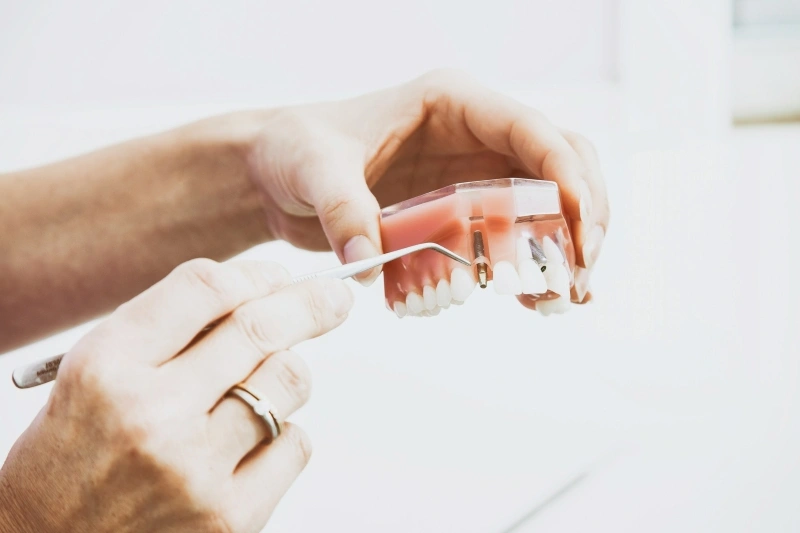
Crowns, bridges, implants, brackets, dentures, and cements are built from metals, resins, acrylates, and occasionally latex or eugenol compounds. Any of these can, rarely, provoke a reaction in someone already sensitized – a worry often behind searches for allergy dental implants or amalgam safety. Yutopia Care can add a broader layer to a dental workup when symptoms don't point clearly at one source.
What Is A Dental Material Allergy?
A dental material allergy is an immune-mediated reaction: the body treats a substance in a filling, crown, or appliance as a threat, usually showing up as inflammation, redness, or lichenoid change where it touches.
Allergy Vs Irritation Vs Intolerance
Several distinct mechanisms can produce nearly identical symptoms, which is why symptoms alone don't establish an allergy:
- True allergy (hypersensitivity) – the immune system reacts to a specific compound, often days after contact
- Local irritation – friction or chemical contact damages tissue directly, with no immune involvement
- Mechanical trauma – sharp edges, an ill-fitting denture, or clenching injure the mucosa
- Galvanic or corrosive reaction – dissimilar metals create a small current or corrode, irritating tissue
- Non-allergic inflammation – plaque buildup or existing gum disease drives the swelling
- Toxic effect – a substance damages cells directly at high exposure, unrelated to sensitization
Treating every sore spot as allergic risks removing a well-tolerated restoration for the wrong reason.
Immediate Vs Delayed Hypersensitivity
Most dental reactions are delayed-type (Type IV), building over days rather than minutes. Immediate (Type I) reactions – hives, swelling, or breathing trouble within minutes – are rarer and more often linked to latex than to metals or resins.
Metals Behind Most Dental Material Allergies
Reactions hinge on the exact alloy, not simply whether a restoration contains metal. Metals linked to sensitization include:
- Nickel – the most frequently identified metal allergen in dental patch testing
- Cobalt – often paired with chromium in cast partial dentures and some crowns
- Chromium – used across a range of dental alloys and orthodontic parts
- Palladium – increasingly common in crown and bridge alloys
- Mercury-related amalgam components – present in traditional silver fillings
- Other alloy components, including gold, copper, and tin, less commonly
A retrospective study of 439 adults referred for suspected allergies to dental materials found just over half tested positive to at least one allergen on a 24-substance dental patch series, with nickel and palladium accounting for the largest share of positive metal reactions.
Is Titanium Really Hypoallergenic?
Titanium has long been treated as the safe, inert default for implants, crowns, and orthodontic wire. That assumption is loosening: a 2025 review concluded titanium isn't assumed fully inert anymore, pointing to closer scrutiny of implant metals generally, not titanium alone. It remains one of the better-tolerated dental metals overall – "hypoallergenic" just isn't the same guarantee it once was.
Dental Amalgam And Amalgam Fillings
Amalgam combines mercury with silver, tin, copper, and zinc into a stable filling. True hypersensitivity is rare – most patients with amalgam never react. A few signs tend to point toward a genuine reaction rather than coincidence:
- The lesion sits directly against the filling, not elsewhere in the mouth
- It appears as a white, lace-patterned, or red lichenoid patch
- It improves or resolves once the amalgam is replaced
That localized pattern is why clinicians check lesion placement before pinning symptoms on a dental amalgam allergy. For anyone curious about broader mercury exposure beyond dentistry.
Acrylics, Resins, And Bonding Materials
Composite fillings, bonding agents, denture bases, and orthodontic materials rely on acrylates and methacrylates to harden. Compounds that show up most often include:
- Methyl methacrylate, used in denture bases and some orthodontic appliances
- HEMA and related methacrylates found in bonding agents and composites
- Glycol dimethacrylates used as cross-linking agents in resin systems
Incomplete polymerization can leave unreacted monomer that acts as a sensitizer, which is why mixing technique and curing time matter almost as much as the material.
Latex And Other Dental Product Triggers
A handful of other products occasionally trigger reactions:
- Latex gloves or rubber dams
- Certain impression materials
- Eugenol-based cements
- Formaldehyde-related compounds
- Various adhesives
These tend to affect dental staff through repeated occupational exposure just as often as patients in the chair.
Common Allergy To Dental Materials Symptoms
Symptoms cluster around the tissue actually touching the offending material, though a few cases extend further. Commonly reported signs include:
- Burning or a persistent stinging sensation in the mouth
- Redness, soreness, or swelling of the gums near a restoration
- White or lace-like patches (lichenoid changes) next to a filling or crown
- Ulceration or a metallic taste that won't resolve
- Localized itching or dermatitis around an implant or appliance
- Occasionally, skin reactions elsewhere on the body traced to a specific dental metal
None of these signs are exclusive to allergy – the same list can describe an infection, an ill-fitting appliance, or gum disease, which is why a checklist is a starting point, not a diagnosis.
How Soon Symptoms Can Appear After Treatment
Timing depends on the type of hypersensitivity involved:
- Delayed reactions (most common with metals and resins) – days to several weeks after a restoration is placed
- Immediate reactions – minutes to a few hours, more typical of latex than metals
- Late-onset reactions – sometimes years later, once a filling or crown starts to wear or corrode
Oral Lichenoid Contact Lesions
The clearest presentation is an oral lichenoid contact lesion: a white, lace-patterned or red patch on the cheek, tongue, or gum touching the restoration. Replacing the material often resolves the lesion when it genuinely was the trigger – one of the clearer signs of a dental amalgam allergy in particular.
Is Mercury In Amalgam The Same As Mercury Poisoning?
No. Mercury poisoning is toxic exposure far above what a filling releases, producing distinct neurological and systemic symptoms. A localized amalgam reaction stays confined to nearby tissue instead – conflating the two fuels a lot of unnecessary worry about amalgam safety.
How Suspected Dental Amalgam Allergy Is Evaluated
Evaluation starts with a close look at where symptoms sit relative to the filling, followed by patch testing with amalgam and its components if the pattern fits contact allergy rather than infection.
What Dental Allergy Testing Involves
Patch testing is the standard approach: small amounts of suspected allergens go on the skin, usually the back, then get checked at set intervals – typically 48, 72, and sometimes 96 hours later. It's the most reliable way to identify delayed hypersensitivity to metals, acrylates, and other dental compounds.
Building A Material History Before Testing
Before any patches go on, a clinician needs a full inventory of what's in a patient's mouth and history, including:
- Existing fillings and their material type
- Crowns and bridges, including the alloy where known
- Implants and their material specification
- Dentures and denture base material
- Orthodontic appliances, brackets, and wires
- Cements and bonding agents used previously
- Any past reaction to jewelry or other metal contact
- A personal history of eczema or contact allergy
Why The Material History List Matters
Without it, testing turns into guesswork – a clinician might test for allergens never present in the mouth while missing the one causing trouble. A precise inventory also helps interpret results: a positive reaction to a metal absent from any restoration carries far less weight than one matching an existing crown or implant.
Dental Allergy Testing Before A Dental Implant
For most patients, testing isn't routine before implant placement, since confirmed titanium reactions remain uncommon. It's worth considering for:
- Patients with a documented metal allergy
- A history of reacting to jewelry or orthopedic hardware
- Unexplained symptoms after prior dental work involving metal
A study of 95 patients patch-tested ahead of titanium implant surgery found 40% reacted to at least one metal, most often nickel, though titanium sensitivity itself stayed rare. Anyone weighing allergy dental implant concerns before surgery is usually better served by talking with their dentist than by blanket testing.
If symptoms do develop after placement and the cause isn't obvious from a dental exam, Yutopia Care can help by looking at sensitivity more broadly than a single-material dental panel.
Signs Worth Discussing With Your Dentist
Allergies to dental materials can occur, but remain the exception, not the rule – most oral discomfort after dental work has a mechanical, infectious, or inflammatory explanation, not an immune one. The most convincing cases share three features: a symptom pattern that fits a recognized allergic presentation, a clear exposure to a specific material, and a supportive testing result tying the two together. Worth flagging to a dentist:
- Allergy to dental materials: symptoms clustered around one specific restoration
- Reactions that started shortly after a new filling, crown, denture, or implant
- Discomfort that matches a known jewelry or metal allergy
- Lesions that improve once a suspected material is removed
The same signs can just as easily point to infection or unrelated oral disease, so a careful history and, where indicated, patch testing remain the most reliable way to tell the difference – a distinction that matters as much for allergy dental implants questions as for amalgam. Yutopia Care can help connect dental-specific findings with a wider sensitivity profile before deciding on next steps.
Frequently Asked Questions
Can you actually be allergic to a dental filling or crown?
Yes, though it's uncommon. A genuine allergy usually involves one specific metal or resin component, confirmed through patch testing, not symptoms alone.
What are the symptoms of a metal allergy from a dental implant?
Persistent redness, soreness, or swelling around the implant, sometimes with a lichenoid patch nearby – though implant discomfort has several other causes to rule out first, such as:
- Infection at the implant site
- Poor initial fit or occlusion
- Ordinary post-surgical healing
Is amalgam allergy in dental fillings common?
No. True hypersensitivity is rare, and most people with amalgam fillings never react. When it occurs, a lichenoid lesion touching the filling is the most typical sign.
How do dentists test for a metal or resin allergy before treatment?
Through patch testing, run by an allergist or dermatologist alongside the dental team, using a panel built around the patient's material history rather than a generic list.
Can a dental material allergy cause symptoms outside the mouth?
Occasionally. Skin reactions elsewhere on the body have been linked to specific dental metals, though this is far less common than oral symptoms.