Quick answer: Physiotherapy and sports injury rehab help athletes recover in a structured, staged way – not just easing pain, but rebuilding strength, movement quality, and sport-specific capacity so the body is genuinely ready for full training again. Athletes who follow a proper plan of physiotherapy for sports injuries tend to return safer, stronger, and with a much lower chance of the same problem showing up again a few weeks later.
Here's the context behind that answer, what the process actually involves, and how a clinic like Yutopia Care structures it from the first assessment to full return to sport.
The Gap Between Feeling Fine and Being Game-Ready
An athlete can feel "fine" long before the injured tissue actually is. The pain settles, walking feels normal, even light jogging seems okay – so training picks back up. Then, a few weeks later, the same knee, hamstring, or shoulder flares up again, sometimes worse than before. This is one of the most common patterns in sport, and it's exactly why physiotherapy and sports injury recovery need to be treated as two parts of the same process, not two separate stories that happen to overlap.
Feeling better and being ready are not the same thing. Strength, coordination, tissue tolerance, and confidence under real sporting demand all take longer to rebuild than pain takes to settle. This article breaks down what physiotherapy for sports injuries actually involves, why timing matters so much, and how a clinic like Yutopia Care structures rehab so athletes get back to their sport instead of back to the treatment room a month later.
What Is Sports Injury Physiotherapy?
Sports injury physiotherapy is a hands-on, exercise-based branch of physical therapy built around the specific demands of training and competition, rather than general daily function. Physiotherapy in sports injuries goes several steps further than basic care: it identifies exactly which tissues are affected, how much load they can currently handle, and what needs to happen next to get the athlete moving, then loaded, then competing again.
How physiotherapy for sports injuries differs from general rest
Rest alone can calm symptoms, but it does nothing to rebuild strength, retrain balance, or correct the movement habits that may have contributed to the injury in the first place. That's the real difference between physiotherapy and sports injury management done properly, and simply waiting it out: one actively prepares the body for sport again, while the other only waits for pain to fade and hopes the rest sorts itself out.\

What does a sports physiotherapist evaluate?
A thorough evaluation looks well beyond the injury site itself. A sports physiotherapist typically checks:
- Range of motion and joint mobility in the affected area
- Strength and endurance compared with the uninjured side
- Movement patterns, balance, and coordination
- Sport-specific actions such as cutting, jumping, sprinting, or throwing
- How pain behaves during rest, daily activity, and load
- Confidence and psychological readiness to return to contact or competition
Which athletes can benefit?
This isn't only for elite competitors. Weekend runners, school-level footballers, gym-goers recovering from a strain, and professional athletes all benefit from physiotherapy for sports injuries, because the same principles – accurate assessment, staged loading, and sport-specific preparation – apply regardless of level or age.
Why Should Athletes Start Rehabilitation Early?
Waiting until pain becomes unbearable, or until a season is already lost, tends to make recovery slower and less predictable. Bringing sports injuries and physiotherapy together early, ideally within the first few days, helps control swelling and pain before they settle in, keeps healthy joints and tissue moving so they don't stiffen up, and stops an athlete from quietly changing their technique to avoid discomfort – a habit that often causes a second injury somewhere else entirely. Early input also gives the physiotherapist a clearer picture of what actually happened, before compensations and guarding patterns start to hide it.
A 2025 review of musculoskeletal rehabilitation models pointed to inconsistent structure and timing as one of the main reasons athletes end up with prolonged or repeat injuries, and argued for a clearer, phase-based approach applied from the outset rather than introduced halfway through recovery.
A few warning signs usually mean it's time to book an assessment rather than wait it out:
- Pain that lingers more than a few days after a knock or twist
- Swelling that doesn't settle with basic rest and ice
- Noticeable weakness, instability, or "giving way" in a joint
- Avoiding certain movements without really thinking about why
- A previous injury in the same area that never fully settled
If any of these sound familiar, Yutopia Care's sports and tissue injuries page outlines the assessment and treatment options available before things progress further.
What Are the Main Benefits of Physiotherapy and Sports Injury Rehab?
The benefits of sports injuries and physiotherapy working together go well beyond simple pain relief. When rehab is done properly, athletes typically notice:
- Mobility is restored where the athlete actually needs it – not just general flexibility, but the specific ranges of motion a sport demands, such as shoulder rotation for throwing or hip mobility for kicking.
- Cardiovascular fitness can be maintained through modified training, so an athlete doesn't lose months of conditioning while an isolated injury heals.
- Strength returns symmetrically, reducing the gap between the injured and uninjured side that so often leads to compensation injuries later.
- Reinjury risk drops, because rehab addresses the underlying cause, not only the symptom.
- Return-to-play timelines become clearer, since progress is measured against objective markers rather than guesswork.
- Confidence rebuilds alongside the body, which matters just as much in contact sports as raw physical readiness.
How Does Physiotherapy Support Different Stages of Recovery?
Recovery isn't one long block of treatment; it moves through distinct phases, each with its own goals. This is part of why physiotherapy in sports injuries is often described as staged rather than linear, with clear markers before an athlete moves to the next level of demand.
Stage One: Protecting the injury and controlling symptoms
The early focus is on managing pain, swelling, and protecting the healing tissue, while keeping the rest of the body active where it's safe to do so.
Stage Two: Restoring basic movement
Once acute symptoms settle, the aim shifts to regaining pain-free range of motion and normal, unguarded movement patterns.
Stage Three: Rebuilding strength and work capacity
Progressive loading rebuilds muscle strength, endurance, and tissue tolerance so the area can handle the demands of daily training again.
Stage Four: Developing power, speed, and control
Athletes work on explosive strength, reactive control, and coordination – qualities that go beyond basic strength and start to resemble sporting movement.
Stage Five: Returning to sport-specific training
Drills become closer to the actual sport, involving cutting, contact, or sprinting under controlled and progressively increasing conditions.
Stage Six: Returning to performance
The final stage confirms the athlete can perform at full intensity, under fatigue and pressure, without the earlier symptoms returning. This staged pacing isn't just clinical tradition, either – a 2025 U.S. review of return-to-sport rehabilitation for elite athletes made the same point, describing recovery as a continuum through returning to participation, returning to sport, and returning to performance, each with its own criteria to clear before moving on. In other words, the calendar matters less than the athlete's actual progress through each stage.
How Does Yutopia Care Approach Sports Injury Rehabilitation?
Rather than treating a single symptom in isolation, Yutopia Care builds a full picture of the athlete's injury before deciding on a plan. Here's a closer look at how that integrated model is put together.
Integrated assessment rather than isolated symptom treatment
Yutopia Care combines physiotherapy, medical input, pain management, therapeutic massage, and functional rehabilitation within one connected clinical setting, so an athlete isn't shuttled between disconnected providers who never compare notes. In practice, that integrated model draws on:
- Manual orthopedic physiotherapy and joint mobilization
- Reflexology and osteopathic techniques, developed under Sami Chehade's clinical practice
- Pain management support, led by practitioners such as Dr. Alaa Saleh, who works across physiotherapy and chronic pain rehabilitation
- Therapeutic massage to ease tension and support tissue healing
- Functional, sport-specific rehabilitation exercises
This combination is aimed at orthopedic and sports-related conditions such as chronic back pain, joint injuries, and post-injury complications, and you can see how these services fit together on Yutopia Care's physiotherapy and osteopathy page and sports and tissue injuries page. The goal isn't just to reduce pain in a single session, but to build a plan that moves an athlete through each stage of recovery with input from more than one discipline at once.
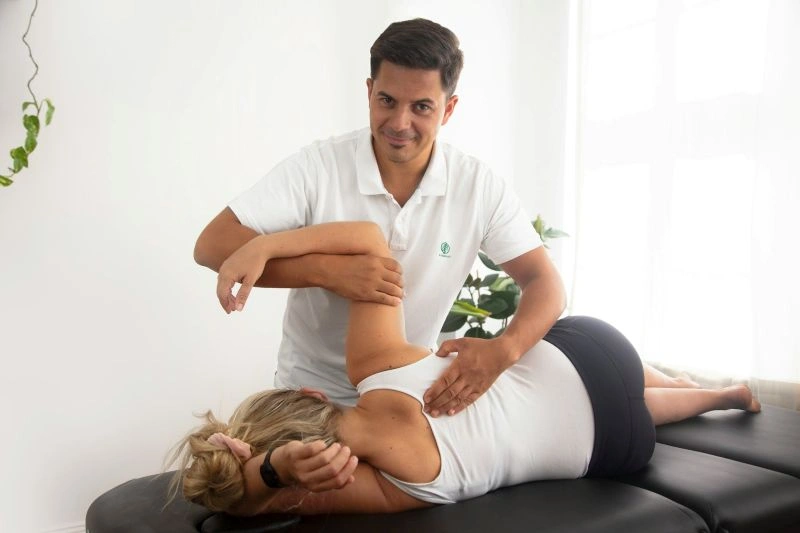
Rehabilitation Should Prepare Athletes for Sport, Not Just Daily Life
It's worth repeating: physiotherapy and sports injury rehabilitation is not limited to easing pain or getting someone back to walking comfortably. Being able to climb stairs or sit through a workday is a low bar for an athlete who needs to sprint, twist, jump, or take contact at full intensity. Real rehab has to close that gap – testing power, agility, and confidence under conditions that resemble actual competition, not just a clinic's exercise mat.
For athletes, sports injuries and physiotherapy are two sides of the same recovery process, and neither one does its job properly without the other. Yutopia Care's integrated physiotherapy, pain-management, manual-treatment, and functional-recovery services are built around exactly that idea – giving athletes a structured, medically supported route back to full training and performance, rather than a generic exercise sheet and a hope for the best. Athletes who want to look further into the approach can browse the Yutopia Care blog for more health insights, or go straight to booking an assessment.
Frequently Asked Questions
Is physiotherapy necessary after every sports injury?
Not every minor strain needs a full rehab program, but any injury that limits movement, strength, or confidence in a sport-specific action benefits from professional assessment. A physiotherapist can also catch small issues before they become bigger ones.
How long does sports injury rehab usually take?
It depends on the injury, the athlete's baseline fitness, and how early treatment starts. Minor issues might resolve in a few weeks, while more significant injuries, such as ligament tears, can take several months to move through all stages safely.
Can physiotherapy prevent a sports injury from happening again?
It significantly lowers the risk. By correcting strength imbalances, movement patterns, and load tolerance, rehab addresses many of the root causes behind repeat injuries, rather than just calming the symptoms of the first one.
What's the difference between physiotherapy and just resting an injury?
Rest reduces stress on an injury but doesn't rebuild strength, coordination, or sport-specific capacity. Physiotherapy actively restores those qualities through guided, progressive loading, which is why athletes who only rest often reinjure themselves once they resume training.
Is physiotherapy in sports injuries only for professional athletes?
No. Recreational and amateur athletes face the same underlying issues – reduced strength, altered movement patterns, and unresolved risk factors – and benefit just as much from a structured rehab plan, regardless of their competitive level.


