
Myofascial release therapy is a hands-on treatment that uses slow, sustained pressure and gentle stretching to ease tightness in fascia, the connective tissue wrapped around your muscles. It may help reduce muscle pain, improve range of motion, and make chronically stiff areas feel looser. A session usually pairs a movement check with steady pressure on tender spots. Results tend to be strongest when the hands-on work is paired with exercise.
When Stretching And Massage Stop Working
Some tightness just doesn't listen. You stretch, take breaks, book the odd massage – and by Thursday the same stubborn band is back between your shoulder blades.
When tension keeps returning, the problem often involves fascia, a thin but surprisingly strong web of tissue that surrounds and supports muscles, bones, nerves, and organs.
Who Usually Looks Into Myofascial Release?
People tend to start asking what myofascial release is once the usual fixes stop paying off. Common reasons include:
- Desk-related stiffness: neck and shoulder tightness that builds over long workdays.
- Recurring low back tension: a dull ache that returns despite rest.
- Training tightness: stiff hips, hamstrings, or calves in active people.
- Post-injury stiffness: movement that never fully came back after a strain.
- Tension-linked headaches: tight neck muscles that seem to feed frequent headaches.
What Is Myofascial Release Therapy And How Does It Work?
So, what is myofascial release, exactly? It's a manual technique that works on the tissue around your muscles, using slow, steady pressure to help tight areas move more freely.
Understanding Fascia And Its Role In Movement
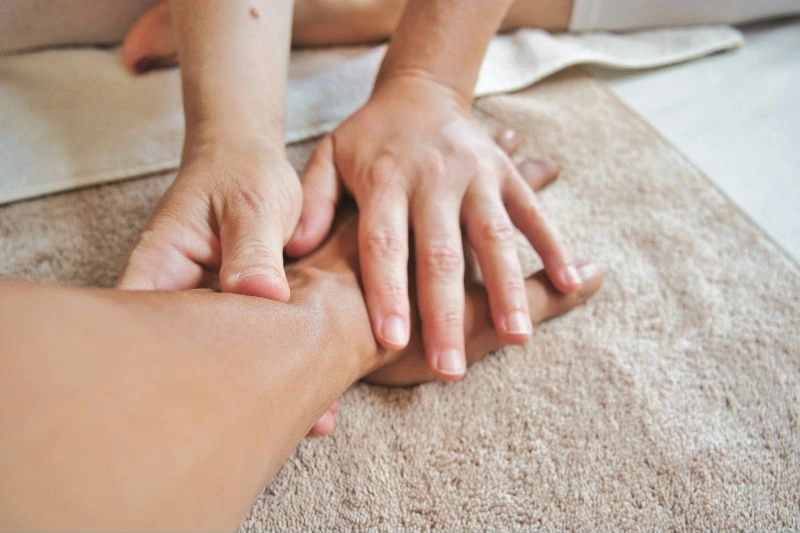
Fascia is a continuous layer of connective tissue that surrounds, separates, and supports muscles, bones, nerves, and organs – a bit like the white pith wrapping each segment of an orange. When it's healthy, its layers glide as you bend and twist. They can feel stiffer and less willing to slide after:
- an injury or surgery
- weeks of inactivity
- months of the same posture at a desk
- repetitive training without enough recovery
- ongoing stress that keeps muscles braced
How Myofascial Release Techniques Work
The pace is deliberately slow. A practitioner finds a tender or restricted area, applies gentle-to-moderate pressure, and waits – often a minute or longer – for the tissue to soften. Common approaches include:
- Sustained pressure: steady contact on a sore point until it eases.
- Cross-hand stretching: two hands placed on the skin and slowly drawn apart.
- Tissue mobilization: shifting skin and deeper layers to find where movement feels "stuck."
- Active release: pressure combined with slow movement of the joint.
Why Slow, Sustained Pressure Matters
The exact mechanism is still being studied, but steady, predictable pressure seems to calm an area that's been sore and guarded for weeks.
Myofascial Release Vs Traditional Massage
Anyone asking "what is myofascial release?" usually wants to know how it differs from a regular massage. Both are hands-on, but the intent is different.
What Are The Benefits Of Myofascial Release Therapy?
The benefits of myofascial release tend to be practical rather than dramatic.
May Help Reduce Muscle Pain And Discomfort
Short-term pain relief is the most consistent result, especially for the low back, neck, and shoulders. Less pain also makes it easier to move normally, breaking the cycle of guarding and stiffness.
May Improve Flexibility And Range Of Motion
When tissue around a joint moves more easily, the joint often follows. A stiff neck may turn further, or bending forward may feel less like a battle. Without follow-up work, though, these gains tend to fade.
May Support Recovery Alongside Physiotherapy
This is where the evidence looks most promising. A 2025 review of knee osteoarthritis studies found that adding myofascial release to standard care or corrective exercises did more for pain, function, and knee range of motion.
That's why it usually sits inside a physiotherapy and pain management plan rather than standing alone.
May Reduce Perceived Muscle Tension And Promote Relaxation
Many people leave feeling looser and less "braced." Among the benefits of myofascial release, this one is the hardest to measure, yet often the first people notice. Yutopia's article on vagal nerve benefits explains why that calmer state matters.
What It Can And Can't Do
Realistic expectations make it easier to judge whether treatment is working:
- It can ease pain and stiffness in the short term.
- It can make exercise and stretching feel more manageable.
- It can't fix underlying causes like weak muscles or poor posture on its own.
- It isn't a substitute for medical assessment when symptoms are severe or unexplained.
What Happens During A Myofascial Release Therapy Session?
Most sessions follow a clear sequence, from questions and tests to hands-on work and aftercare.
Step 1: Initial Consultation And Movement Assessment
The first visit opens with a conversation. Expect questions about:
- where it hurts and for how long
- what eases or worsens it
- past injuries and medical conditions
- your work setup, training, and daily habits
Then comes a quick movement check and screening for anything a doctor should see first.
Step 2: Identifying Areas Of Muscle And Tissue Tension
Next comes palpation – feeling for spots that are tender, thickened, or reluctant to move. The tightest area isn't always where the pain shows up. A sore shoulder can be linked to tension in the upper back or chest.
Step 3: Applying Myofascial Release Techniques
You'll usually lie on a treatment table, and little or no oil is used so the hands can grip rather than glide. During each hold, you might feel:
- a deep, slow stretch
- gentle warmth in the area
- a mild "good hurt" that eases as the tissue softens
Sharp pain isn't the goal, so speak up if the pressure feels like too much.
Step 4: Reassessing Movement And Symptoms
Your earlier movements are then retested. A small gain, like turning your head further, shows the approach is working.
Step 5: Aftercare And Follow-Up
Mild soreness for a day or so is normal, and a light walk usually helps more than complete rest. You may also get a few simple myofascial release exercises to keep progress going between visits.
Simple Self-Release Moves To Try At Home
For everyday stiffness, myofascial release exercises with a foam roller or firm ball make a useful habit. Move slowly and pause on tender spots for 30 to 60 seconds while breathing normally.
- Upper back roll: lie on a foam roller across your upper back and roll between the shoulder blades and lower ribs.
- Shoulder blade release: lean into a massage ball pinned between your back and a wall.
- Glute release: sit on a ball, shift your weight to one side, and let the hip muscles soften.
- Calf roll: rest one calf on a roller and roll from ankle to just below the knee.
- Foot roll: roll a small ball under the sole of your foot while seated.
Skip rolling over the spine, the front of the neck, joints, or injured areas.
When To See A Professional Instead
Home work has limits. It's worth booking an assessment if:
- pain hasn't improved after a couple of weeks of self-care
- the same spot keeps flaring up
- pain spreads into an arm or leg
- you notice numbness, tingling, or weakness
How To Choose The Right Practitioner
Typing "myofascial release therapy near me" into a search bar brings up everything from spas to sports clinics. Before booking any result for myofascial release therapy near me, check for:
- Clinical training: licensed osteopaths or physiotherapists, not just a weekend course.
- A proper assessment: questions and movement tests before any hands-on work.
- A clear plan: what's being treated, why, and how progress will be measured.
- Exercise guidance: things to do between sessions, not appointments alone.
- Honest expectations: no promises of a permanent fix in one visit.
How Does Yutopia Care Provide Myofascial Release Therapy In Dubai?
At Yutopia Care, myofascial release therapy is one part of a personalized plan, not a one-size-fits-all treatment.

Myofascial Release As Part Of Yutopia's Osteopathy Services
Yutopia Care is a Dubai-based clinic offering personalized osteopathic assessments and hands-on treatment. Myofascial release is listed under the Manual Treatment & Functional Release part of its osteopathy program, alongside techniques such as:
- gentle joint manipulation
- craniosacral therapy
- visceral (organ) manipulation
- lymphatic drainage
- postural balancing
For anyone in Dubai searching for myofascial release therapy near me, this means clinical care, not a spa add-on.
Personalized Assessment And Hands-On Treatment
Every plan starts with a look at alignment, joint mobility, fascia, and nervous system patterns. Sessions are led by Yutopia's osteopaths, with breathing techniques and mobility routines as aftercare.
Combining Manual Therapy With Physiotherapy And Exercise
When pain needs more structured rehab, Yutopia's physiotherapy and pain management program adds:
- deep tissue and trigger-point release
- joint mobilization and posture correction
- core and glute activation
- personalized home exercises
Is Myofascial Release Therapy Right For You?
If tightness keeps returning despite stretching and the odd massage, myofascial release therapy may be worth exploring. The benefits of myofascial release – less pain, easier movement, and a less guarded body – suit stubborn neck, shoulder, and back tension, especially alongside targeted exercise.
Results vary with the cause and the wider treatment plan, so an assessment is the best way to know if it fits you.
Frequently Asked Questions
Does myofascial release actually work, or is it just a fancy massage?
It's more targeted than a standard massage. Recent studies show encouraging short-term results for pain and mobility, especially alongside exercise.
Is myofascial release supposed to hurt?
It can feel intense, like a deep stretch, but it shouldn't be sharply painful. Pressure can always be adjusted, so speak up if it's too much.
How many sessions does it take to feel a difference?
Some people notice a change after one visit, but lasting results usually take several sessions plus home exercise.
What is myofascial release not recommended for?
It's usually avoided over open wounds, fractures, burns, infections, or suspected blood clots, and in some cancers. Mention osteoporosis or blood thinners at your consultation.
Can I do myofascial release on myself at home?
Yes. Simple myofascial release exercises with a foam roller or massage ball can ease everyday stiffness, but they shouldn't replace professional care for persistent or unexplained pain.